Friday, 14 September 2012

Two Moral Dilemmas

My piece on the two glaring moral dilemmas in the Indian economy was carried on its Op-Ed page by The Economic Times. The first dilemma is about projects with long gestation period being denied long term funds, even though they exist in the economy and are actually being used to fund the government's fiscal deficit. The second one is about long terms sources of savings are being not deployed in long term investments, in the name of safety, and thus yielding negligible returns.

Read the piece here: http://bit.ly/Sje6oL

Saturday, 8 September 2012

India At The Bottom Of Fitch Heap

India is now the worst country, in terms of credit ratings, among all the countries that make up "Emerging Asia", according to rating agency Fitch.

In simple terms, this means that if you are a global lender, wanting to lend some money to countries, then Fitch feels Mongolia or even Sri Lanka stand a better chance of repaying your principal and interest than India! And the developed Asian countries -- Australia, Japan, Singapore, Hong Kong and New Zeakland -- are, of course, in a completely different league altogether.

Here is where India stands:
Source: Fitch Ratings (Asia-Pacific Sovereign Credit Overview, dated September 6, 2012)


India, as you will notice, is at the bottom of the heap with a "BBB-" rating. The only other country with a similar rating is Indonesia, but it's outlook is "Stable" and hence better than India's "Negative". So, overall, that puts India behind Indonesia and at the bottom of the league tables.

There's now a suggestion among some of the global economistas and commentators that Indonesia should replace India as the "I" in BRICS.
 
Okay, granted that credit rating agencies are not exactly paragons of virtue or prescient in predicting value destruction. Examples abound: the sub-prime loan crisis is the best example. So, are the ratings given to Greece, Spain or  Italy just before they went bust! While you may or may not agree with this rating, it is a subject for another debate. But, that still doesn't take away from the central point that we're up shit creek without a paddle? Fitch just added another hole to this wobbly boat!

Tuesday, 4 September 2012

Revenue Foregone Argument Is Woebegone

Finance minister P Chidambaram has the unenviable task of reviving an economy after it was ruined systematically for over 36 months. One of the items high on his to-do list is to reduce the deficit, either by cutting expenditure or by increasing revenue collection. Forget the expenditure cut bit, primarily because it's political hara-kiri. In a chat with journalists on Monday, he expressed a view that companies paying an effective tax rate of 24-26% -- against the applicable rate of 30% plus surcharge -- might deserve a second look.
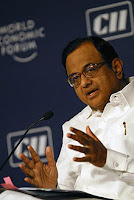
Courtesy: Wikipedia


While reporting on the FM's thoughts, newspaper Business Standard pitched in with a line on "tax foregone" because of deductions granted to the corporate sector (read here). It seems the reporter has added that one line, because no other paper has carried a similar sentence or attributed any such comment to the FM.

Revenue foregone is being equated with revenue squandered, especially in Delhi television studios and punditry columns. The rumblings are familiar: the bill for “revenue foregone” is huge, spend some of that money instead on the poor. The argument is inevitably drawn around the traditional rhetorical lines – tax foregone benefits only the rich (such as industry) while subsidies only benefit the poor. Therefore, the argument goes: abolish all exemptions, tax industry at a higher rate and use the incremental revenue to increase the subsidy budget. This is not only a specious argument but is dubious economics as well. Swaminathan S.A.Aiyar rightly calls it "claptrap" (read here).

It might be instructive to see why the rhetorical argument about revenue foregone can be misleading. For one, the numbers in the revenue foregone statement are based on a clutch of assumptions (for example, projections for 2011-12 are based on revenue foregone during 2010-11) and notional calculations. Therefore, to assume that it is indeed money “diverted” from necessary developmental expenditure is a bit of a stretch. Second, it assumes that all the revenue foregone is actually in the nature of funds granted to favoured entities, which could have rightfully been used for development purposes. That’s also somewhat fallacious. What cannot be denied is the fact that if no exemptions were granted, the government’s revenue collection would have been substantially larger. But, economic policy is all about balancing between different priorities.

The finance ministry tables a separate statement on “Revenue Foregone under the Central Tax System” along with the budget papers every year. This document reveals some of the government’s policy preferences through the lens of taxation. The document states: “Tax preferences may be viewed as subsidy payments to preferred taxpayer. Such implicit payments are referred to as “tax expenditures” and it is often argued that they should appear as expenditure items in the Budget. In this context, the basic issue is not one of tax policy but one of efficiency and transparency – programme planning requires that the policy objectives be addressed explicitly; and programme budgeting calls for the inclusion of such outlays under their respective programme headings. Tax expenditures are spending programmes embedded in the tax statute.”

Taken as such, the argument then boils down to choosing between one subsidy and another. Let’s look at what tax breaks to industry achieve, especially various direct tax exemptions. The debate on revenue foregone usually trains the spotlights on corporates. In the table on “major tax expenditure on corporate tax payers” projected for 2011-12, the largest chunk – Rs 36,468 crore (Rs 33,243 crore actually foregone in 2010-11) -- is taken up by the item “accelerated depreciation”.

Now, this is a tax break provided to companies which are investing in acquiring fresh assets. In a sense, accelerated depreciation basically provides a trade-off: it reduces taxable income in the current period in exchange for increased taxable income in the future, with the pointed objective of encouraging asset creation in the present to generate employment and income. This is a legitimate tax incentive used worldwide for motivating businesses to purchase new assets. This not only results in higher productive capacity for the economy but also increases employment opportunities. Had this money gone as a social sector subsidy, it would have been used up for consumption.

The next big chunk is claimed by “deduction of profits of undertakings engaged in generation, transmission and distribution of power (section 80-IA)” – Rs 8316 crore estimated in 2011-12 against Rs 7581 crore in 2010-11. This should be self-explanatory, given the huge power deficit in the country.

What is unmistakeable is the fact that many tax exemptions are targeted towards creating industrial assets, which will generate value, provide employment and become instruments of economic growth. This was followed even at the state level during the long Left Front rule in West Bengal. Most subsidies, on the other hand, induce consumption and do not encourage asset creation.

The data released throws up another big revelation: the effective tax rate (the actual tax paid as a proportion of the total taxable income) during 2010-11 for 2113 public sector companies is lower than the tax rate for the 457,157 private sector companies in the sample: 22.28% versus 24.61%, respectively. Incidentally, the report also states that the effective tax rate for the corporate sector as a whole has been steadily rising – from 20.55% for 2006-07 to 24.1% for 2010-11 – seeming to indicate that a large number of exemptions are being gradually phased out.

Therefore, the conclusion that all tax exemptions are largesse handed out to the wealthy may seem a bit hasty. There is no denying the fact that governments over time – and cutting across party lines -- have used the instrument of tax policy to reward their most-favoured industrial groups. But, then that doesn’t turn all tax exemptions into villains. Just like leakages in some of the current entitlement programmes do not diminish the merit of all targeted development plans.

What, however, should be debated is whether the implementation of the policy framework in achieving the stated objectives is actually as rigorous as the original intention. Or, there should be focused debate on whether some exemptions have been created to benefit some favourite industrial groups, instead of demanding that all exemptions be abolished.

Saturday, 1 September 2012

Tweet Nothings!

The government today confirmed that is has blocked some twitter handles (read here).

It is exceedingly strange that political parties and regimes wedded to the notion of individual liberty and freedom of speech across the free world are indulging in censorship and gagging dissent.

Three examples stand out. The Indian government --under the guise of maintaining law and order -- has banned some twitter accounts. The ostensible reason is to avoid social media being used to fan communal hatred, especially in the wake of the recent violence in Assam. However, among the twitter handles being banned are also included some which belong to spoof  artists -- those who try to impersonate the prime minister's official twitter feed. This was highly unavoidable as it shows the government bloated up with a sense of self-importance. Finally, and this is dangerous, the list also includes some commentators and right-wing sympathisers.

I feel we are treading treacherous territory here even if this blogger isn't a right-wing supporter. If the right wing nutcase is using his/her social media account to spread hatred and advocate communal violence, then there might even be some justification for the government's actions. But, the notion of a democratically elected government muffling free speech is downright noxious. The reason is today it might be right-wing loonies, but tomorrow it could be anybody. What is to stop the government or its factotums, in a fit of righteous conceit, to start viewing any protest or dissent as a threat to law and order? Once you start going down that path, it's actually a very slippery slope.

The news agencies, a few days ago,  filed an interesting story on what the government is doing to keep its babus away from social media. The story (headlined "Govt cracks whip, orders babus not to post 'unverified' facts on Facebook, Twitter" in Indian Express) can be read here. The attempt again is to ensure that bureaucrats and officers do not use social media to air their views, which could well turn out to be anti-thetical to the government's standpoint. Will they then stop the officer's spouse or even daughter/son from airing their opinion? Where does it stop?

Finally, US president Barack Obama's office recently urged the Indian government not to curb internet freedom, especially in the social media space (read here). This issue came up at a routine briefing conducted by the US State Department. However, the US State Department's concern and comments drew some acerbic comments from journalists and observers. The US has been incredibly thin-skinned while dealing with the transparency of the internet, case in point being the persecution of Julian Assange and Wikileaks.

Meanwhile, an image of a poster is being shared around on Facebook, which reads as follows: "If Govt limits the SMS because it's being misused for spreading rumours, can we stop paying taxes as our money is being misused for corruption?" Now, how will that be treated? Seditious? Disruptive? Communal?

Friday, 31 August 2012

GDP Blues: April-June (2012-13) Data Sums Up Economy's Woes

The year has begun according to expectations. GDP growth figures for the April-June quarter of 2012-13 – at 5.5%, measured on a year-on-year basis -- reveals that the slow growth trend thrown up by the final quarter of 2011-12 (at 5.3%) continues.

This is not entirely unexpected. In fact, many analysts had predicted the growth number close to the final number. For instance, Bloomberg and Reuters had predicted the growth number at 5.2% and 5.3% respectively. Rating agency ICRA had estimated 5.1% while Moody’s assessment clocked in at 5.2%. Some analysts have tweeted that at 5.5% Q1 GDP growth is actually better than expected.

However, there are a couple of issues that must be noted immediately. One, at this growth rate, India is no longer the second-fastest growing economy in the region. It now lags behind Indonesia and The Philippines, with Malaysia nipping at its heels. Niranjan Rajadhyaksha has a nice short piece on it in Mint (read here).

There are is another source of anxiety. Manufacturing growth during the quarter, measured on a year-on-year basis, comes in at a dismal 0.2%, continuing the trend from the previous quarters. So what really saved the economy seems to be a 10.9% growth in construction and 10.8% growth in the segment titled as “financing, insurance, real estate and business services”. This seems to be a bit of an anomaly: if construction grew by over 10%, then it must have consumed cement and steel. Yet, this does not reflect in the manufacturing numbers -- unless, of course, the construction industry was running down its accumulated inventory of raw materials. Also, steel and cement combined have a decent weight in the index for industrial production.

The pathetic manufacturing data pretty much reflects the slowdown tightening its grip on the economy. Given that 0.2% growth also means people consumed almost exactly as much as they consumed during April-June 2011, does it also reflect slowing down demand? Could be true, given that private consumption expenditure grew by only 4.7%. This is lower than the growth registered by consumption expenditure in the past few quarters, particularly 6.% in the immediately preceding quarter. After all, wasn't it the boast of policy wonks that the consumption story had kept the India story vibrant during the global slowdown? That engine of growth seems to be sputtering now.

The other engine of growth -- investment -- also throws up a depressing picture. Investment growth during Q1FY13 came in at a measly 0.7%. The Indian economy at this point seems like an aircraft with both its engines seizing up.

So, where is this 5.5% impetus coming from? Consumption of services? Perhaps, especially because of money distributed by the government in the form of social sector hand-outs. The segment “community, social and personal services”, which captures these payouts (or considered an euphemism for all kinds of social sector hand-outs), grew by almost 8%. The government’s own expenditure – under the head “government final consumption expenditure” – has also grown 9%.

This pretty much sums up the problem facing the economy: largesse distributed by the government is distorting income levels, creating a spike in aggregate demand without an accompanying boost in investment activity (or creation of sustainable assets). This, in turn, is leading to a situation of low growth and high inflation.

Rating agency Crisil has come up with two interesting reports, one of which states that rural consumption now out-strips urban consumption. This outcome is primarily a consequence of money doled out in the rural areas by the government, described by some economists as money thrown from a helicopter.

But, that still leaves many unanswered questions in this puzzle -- for instance, if the rural consumption story is really so strong, and growing apace, why isn't manufacturing responding by increasing capacity? Is it being discouraged by the current policy paralysis? Or, are expectations playing a major role: that this rural story may not be a secular trend and might peter out soon? Or, expectations that interest rates might not soften in the near future? Methinks it's a combination of all the three expectations.

Tuesday, 14 August 2012

Inflation Eases, But Don't Dream Yet

The inflation figures for July, released today (Tuesday, August 14, 2012), paint a confusing picture. Overall inflation has relented a bit and comes in at 6.87%, measured on a year-on-year basis. This is lower than most expectations; various polls had estimated the figure close to 7.5%.  Last year, the inflation figure for July had come in at 9.36%.

So, what's brought the price levels down? Manufactured products actually, which have a weight of about 65% in the index. Prices in certain product categories -- such as "beverage, tobacco and tobacco products", "paper and paper products", "leather and leather products", cotton textiles -- are at the same level as last July.

That is a relief and the stock markets rallied immediately, in the hope that Reserve Bank will now have enough moral and economic fire-power to cut interests rates. 

However, that seems unlikely to happen so soon.

For one, RBI doesn't act on the basis of data for only one month. It has to be convinced that the rate of rising prices is slowing down on a secular basis.

But, more importantly, there are some bugs and time-bombs hidden away in the data. For instance, food inflation is up to 10%, compared to 8.2% in July 2011. Now, that's a source of worry -- given the reluctant monsoons this year, food prices have the potential of ratcheting up further.

Look at what's bumping up food prices. Potato (yes, that most humble of vegetables) prices have jumped 73% in July compared to the prices prevailing in July 2011. In fact, potato prices have almost doubled since March 2012! Prices of vegetables on the whole are playing havoc -- prices are up 24%! 

Even the protein sector is looking scary: pulses are up 28%, while prices of  eggs, meats and fish together are up 28%. 

Therefore, this current dip in prices may not bring the kind of succour that people were expecting. 

Monday, 13 August 2012

You Say Off-Shoring, I Say Outsourcing-I

And now comes news about the US authorities cracking down on Standard Chartered for allegedly side-stepping rules that prohibited dollar dealings with Iran or Iranian entities. The crack-down on StanChart raises many questions, leaves many issues unanswered.

For one, as already mentioned in the first instalment of this series, this recent development involving StanChart could be another example of the lax rules that get built into an off-shore risk and compliance centre. The reason for building a global risk and compliance centre in India is to primarily save costs, and not to tap into the fabled Indian talent pool. So, it could be India today and god-knows-where tomorrow.

However, as more news of the StanChart saga emerges, it seems there's more to it than meets the eye. Here are some conjectures.

1. This is another example of bullying and interference that has gained US so much notoriety over the past one century. It’s the with-me-or-against-me syndrome. In fact, when StanC’s US director warned the London office about the regulatory risks involved in dealing with Iran, one senior chap went apoplectic. You can read his outburst here, though there is no confirmation whether this really was the guy or not.

2. This is eager beaver Benjamin Lawsky trying to prove his credentials. He is Superintendent of the New York State Department of Financial Services, an office that has been created recently and he wants to demonstrate that he has what it takes. Read his profile here.

3. There is a suspicion that all this could part of an orchestrated political manoeuvre, with an eye to the upcoming presidential elections a few months later. Democrat nominee Barack Obama has been vocal about jobs being “exported” to India; and now, in a remarkable coincidence, you have examples of offshore centres in India coming across as fast and loose with rules, or lax and plaint. But, as I said earlier, this is just a coincidence, random speculation and there’s nothing to prove the claim.

4. It could also be a fall-out of USA vs Britain. According to The Economist, British politicians are “...accusing US regulators of pursuing an anti-London agenda following recent investigations into HSBC and Barclays.” Read The Economist story here.

5. Finally, the root of the problem is the dollar’s status as reserve currency. As long as that is reality, dollar transaction will need to get cleared in New York and thus will come under the regulatory glare of the US authorities. Iran had once proposed that it wanted to shift its international payments system to the euro. But, given the state of the euro and widespread apprehensions of its imminent collapse, the dollar remains the default reserve currency. Time for the yuan to stand up?

Sunday, 5 August 2012

Blind-Sided By A Rate Cut

In the frenzied build-up to the Reserve Bank's mid-quarter policy review on July 31 and the drumming up of expectations about a rate cut, everybody took their eyes off the other niggling problem looming in the distance -- slowing down deposits growth.

As a result, while the Reserve Bank governor's policy statement on July 31 contained some nuanced messages -- in keeping with the hallowed tradition of subtle, implicit messaging from the central bank -- most of the public read the message only literally.

So next day, predictably, everybody voiced their disappointment at the absence of a rate cut and expressed their surprise at the SLR cut. This was my piece in next day's ET (read here) highlighting some of the cues in the policy document.

But, two days after the policy, this article by Sugata Ghosh (read here) in ET really spelt out the problem, at which I had only hinted and which the Reserve Bank governor tackled without triggering off any alarm bells.

It may be instructive for market participants to get over their obsession with interest rate cuts and try to see the big picture once in a while. In the absence of any credible policy action, a rate cut seems to have become the default solution. The bitter truth is that there are no magic bullets left for the country's economic problems.

Thursday, 19 July 2012

You Say Off-shoring, I Say Outsourcing

Both the Indian economy and the India Inc brand name owe a lot to "outsourcing" as the key to their global recognition and success stories. But, as the recent HSBC scandal demonstrates, the magic of Indian outsourcing seems to be fading away faster than you can say N R Narayana Murthy! What's happening?

The key to the outsourcing trend lies in some of India's strengths built during the 1960s and 1970s -- solid engineering institutions and a knowledge of English. Many global corporations, starting with General Electric and Texas Instruments, realised that some of their grunt work could be outsourced to India. They could use the vast reservoir of Indian engineers to do in India some of the quotidian work they were doing in USA. The prime motivation: saving costs.

This then caught the popular imagination as telecom infrastructure improved during the 90s and made communications -- both data and voice -- cheaper and better. Companies rushed to set up outsourcing centres in India -- shops that basically made sales calls to customers across the English-speaking world, to tackling after sales service issues, to even writing software code.

Another word was added to the business lexicon: "off-shoring". Global companies started spreading their work around the globe, basically to take advantage of cheaper skilled labour pools elsewhere. This also included another phenomenon: transfer pricing, which basically incorporated strategies at the global HQ level of reaping tax advantages by incurring costs in high tax geographies and shifting profits to low tax regimes.

But, since the basic premise behind the entire exercise was cutting costs, there were incentives for inventive managers to keep doing the same thing at lower costs. And, then came the financial crisis. With profits plunging to subterranean depths, companies starting sacrificing well-established risk measures and processes to gain that extra bit of business.

The same applies to banks which had "off-shored" their operations, compliance and risk processes to overseas locations. Ideally, the off-shore location, far removed (geographically, at least) from the business origination centres, were supposed to be neutral and free from any influence. In reality, there's hell to pay if managers in these off-shore centres said "no" to 2-3 consecutive proposals, even if the proposals did not meet the risk matrix guidelines. The pressure to get business is so intense and so acute that anybody saying "no", irrespective of the provenance of the funds, is viewed as an enemy of the institution.

We don't know what happened in HSBC exactly. The bank had an off-shore compliance centre in India to ensure that funds flow met the rules regarding anti-money laundering and terrorist funding. But, what we do know is that  a probe by the US Senate's Permanent Sub-Committee on Investigations found that the Indian compliance office was inadequately staffed, their quality of work was deficient and their monitoring procedures in internal control systems was weak (read full story here and here).

This is not the first time that India off-shore centres have been pulled up for the reasons cited above. In the mad rush to cut costs and stay competitive, many companies are sacrificing critical business processes, making compromises with sacrosanct quality standards. But, the worst culprit seems to be the practice of hiring sub-standard staff, shoring up revenues by skimping on training and telecom facilities and pushing employees to go beyond their call of duty to bring in revenues. This then creates a fertile breeding ground for suspect motives and dodgy ethics.

You can teach all the ehtics you want in B-schools (which, by the way, is another story for another day) but at the end of the day you would need an organisational culture --starting from the Board of Directors to the CEO to even the HR guys -- to implement it. Are we expecting too much from the modern-day corporation?

Wednesday, 18 July 2012

Turkish Coffee -I

My Istanbul flight timings made sure Monday Mocha gave way to Turkish Coffee on Tuesday. So here are some initial impressions from the land of doner kebaps and koftes.

First, all compliments to the new management at the Mumbai International airport. No more sweaty queues to get into the airport terminal or to get the luggage screened. Smiles all around, courtesies extended and no more desperate crowding. Probably it’s because the air-conditioning was working. But, on a more serious note, the change now makes the flying out of Mumbai a pleasurable exercise.

And then to Istanbul. Somewhere I had been expecting a bleak city, with emotions ruling between the grey and the black, the burden of history weighing heavy on the ordinary Istanbullus’ shoulders. Maybe that’s what happens when you try to see the world through the eyes of Orhan Pamuk. According to him, there is a common leitmotif running through the city’s intricately intertwined genetic lattice – melancholy, or huzun, as a predominant cultural identity. But, on the surface, that somehow seems absent. The city looks bright and colourful, with the people eager to succeed, though the strains of balancing the plethora of competing cultural strands that make up modern-day Istanbul do break through the surface sometimes. But then, this is just a superficial impression gained from spending just one day in this great city. More later. Some pictures too coming up soon.